



Overcoming Stereotypes in International Aviation Partnerships
The Middle East’s aviation sector is entering another period of major expansion.
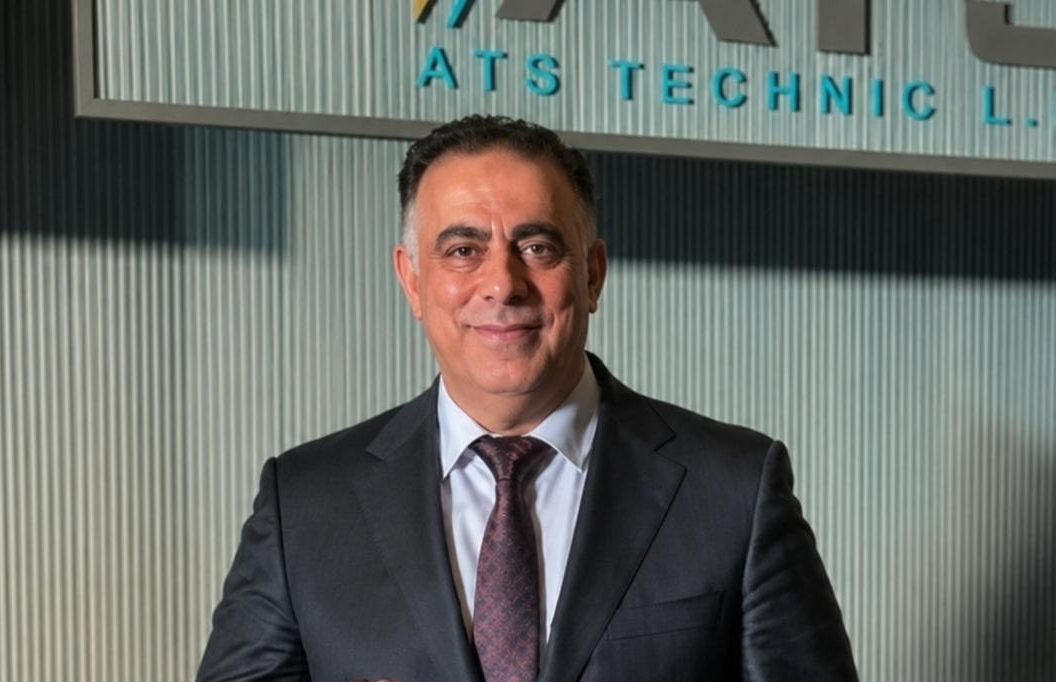
By Mahdi Suliman Al Tahaineh, CEO of ATS Group
New airlines are being created, airport capacity is increasing, and established carriers are adding aircraft, routes and connecting traffic.
Yet, even as the region becomes increasingly central to global aviation, some international perceptions of Arab aviation businesses remain rooted in an earlier era.
Throughout my career, I have occasionally encountered assumptions about what it means to do business with an Arab organisation. They are rarely expressed openly, but they can influence first impressions. There can be an expectation that businesses from the region are more relationship-driven than process-driven, that governance may be less robust, or that operational standards may not match those expected elsewhere. At their most extreme, these stereotypes portray Arab organisations as disorganised or unreliable. More often, they appear through greater scrutiny, repeated requests for reassurance, or an expectation that an Arab aviation business must prove itself more directly before trust is extended.
The problem with these assumptions is not simply that they are unfair. They are also incompatible with the realities of modern aviation.
This is an industry built on regulation, auditability, compliance and precision. It does not tolerate disorder or allow poor governance to remain hidden for long. If an aviation business were genuinely haphazard or unreliable, it simply would not survive.
The Modern Middle Eastern Aviation Landscape
The Middle East provided 270 million one-way airline seats in 2024, making it the sixth-largest aviation region globally by capacity. International capacity was almost nine per cent higher than in 2019, giving the region the second-strongest recovery among the world’s major aviation markets. With only around 20 per cent of capacity being domestic, its aviation model is fundamentally international, connecting virtually every inhabited continent through its major hub airports.
Weak processes cannot be concealed in international aviation. Aircraft maintenance, airworthiness, ground handling, flight operations, procurement and charter services depend on documented procedures, regulatory compliance and meticulous coordination. A missed deadline can disrupt an entire operation, while a maintenance error can ground an aircraft. Even a breakdown in communication can carry financial, regulatory and safety consequences.
The scale and sophistication of the region’s airlines challenge outdated perceptions. Emirates was the world’s 14th-largest airline by seat capacity in 2024 and fourth largest by available seat kilometres. Qatar Airways climbed from 36th globally by capacity in 2014 to 19th in 2024, reflecting the extraordinary growth of Gulf aviation. These are globally competitive businesses operating some of the world’s most complex international networks.
In the UAE, the aviation ecosystem extends far beyond its flagship carriers. It encompasses advanced maintenance, repair and overhaul, business aviation, aerospace engineering, airport operations, integrated logistics and aviation technology.
This is strategic, sustained growth. It requires sophisticated network planning, engineering support, fleet management, slot coordination and technical oversight across hundreds of international routes. Every additional aircraft and destination increases operational complexity. Success depends on disciplined systems, advanced technology and repeatable processes rather than improvisation.
Operational Performance Dispels Outdated Stereotypes
The Middle East’s hub model is equally instructive. Around two-thirds of Emirates passengers and more than three-quarters of both Etihad and Qatar Airways passengers connect through their respective hubs. These airlines manage global interchange systems where disruption in one location can affect passengers, aircraft and crews across multiple continents.
The wider region is evolving rapidly. Saudi Arabia is investing heavily in aviation through Vision 2030, including the launch of Riyadh Air and major airport expansion projects. Qatar continues to strengthen Doha’s position as a leading international hub, while the UAE is expanding airport capacity and deepening its expertise in aerospace, maintenance and advanced aviation services. These developments demonstrate a region helping to shape the future of global aviation rather than simply participating in it.
Competition is equally intense in the Middle East. Airlines cannot rely on geography or reputation alone. They compete on reliability, service quality, network breadth and operational efficiency. In such an environment, technical capability and operational consistency become the currencies that matter.
The region, like any other, is not without challenges. Rapid capacity growth places pressure on airlines, and performance varies between operators. Aviation demands exceptionally high standards from everyone, regardless of where they are based.
But scrutiny should be based on evidence, compliance and operational performance, not nationality or inherited assumptions. No aviation business should be trusted simply because it is based in the UAE, Europe, Asia or North America. Equally, no Arab aviation organisation should enter a partnership burdened by assumptions that it is more likely to be disorganised, unreliable or lacking in transparency.
Aviation is ultimately measurable. Aircraft depart or they do not. Components are compliant or they are not. Maintenance records are complete or they are not. Projects are delivered safely, on time and within specification, or they are not.
That is why aviation provides such a compelling answer to outdated stereotypes. The Middle East has not become a global aviation centre through rhetoric. It has earned that position through investment, regulatory discipline and consistent delivery in one of the world’s most demanding industries.
International aviation partnerships should be judged by the same standard: not by inherited perceptions of Arab businesses, but by safety, transparency, technical competence, operational excellence and the ability to deliver consistently.