


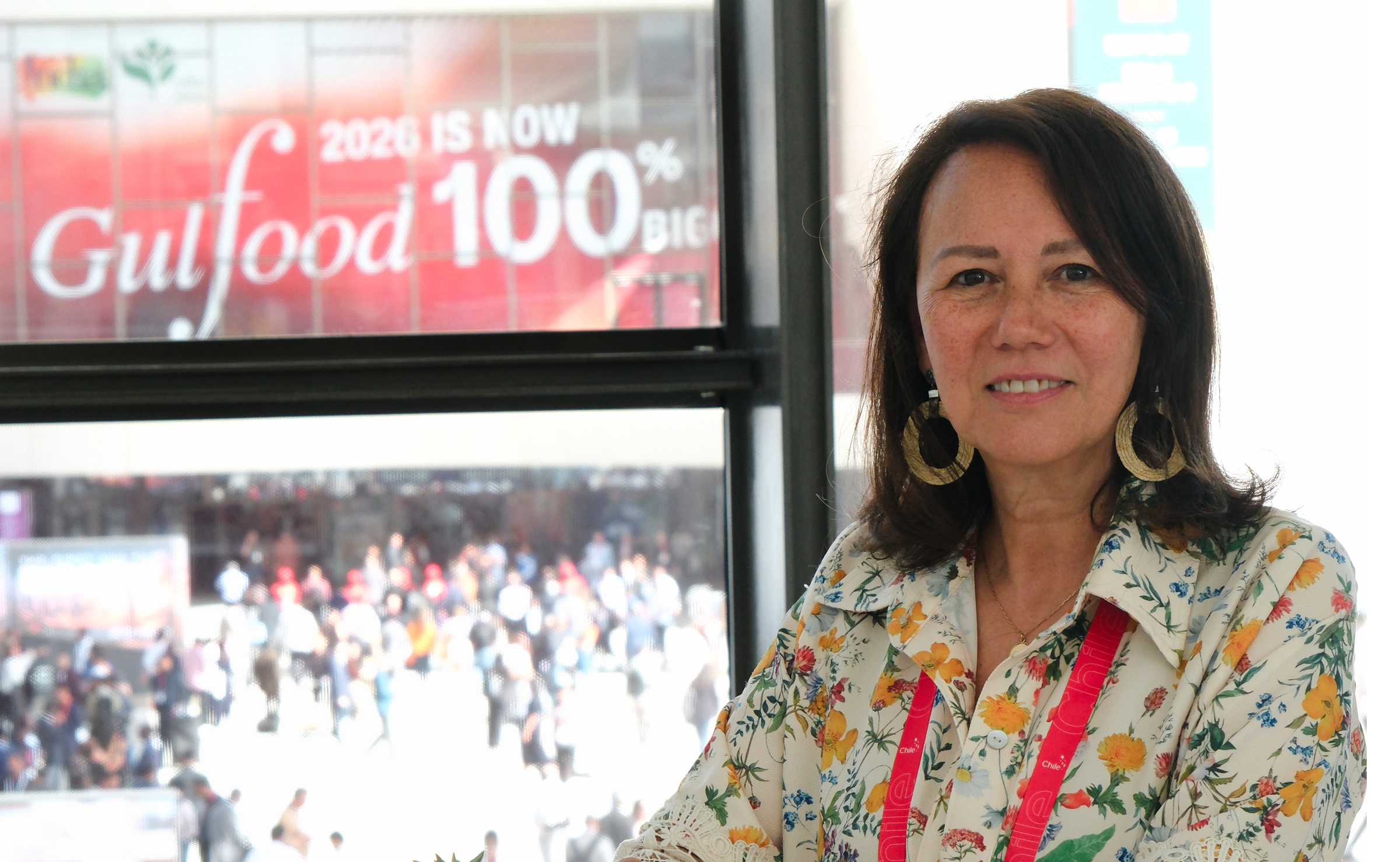
Lorena Sepúlveda participated in Gulfood 2026 as Deputy Director of ProChile, Chile’s export promotion agency, which maintains offices in the United Arab Emirates and in more than 50 countries worldwide. Based in Santiago, she leads the strategic sector units responsible for connecting Chile’s export offer with international demand for high-quality goods and services.
An agronomist by training and holder of a master’s degree in public policy, Sepúlveda brings more than three decades of experience in international trade, having previously headed ProChile offices across Latin America and Europe. Her extensive background and global perspective have played a key role in strengthening Chile’s positioning in international markets.
Below, she shares her insights on Chile’s participation at Gulfood 2026, the country’s export strategy, and the opportunities ahead for Chilean products in global markets.
What is the strategic importance of Chile’s participation in Gulfood 2026, and what are the main objectives ProChile has set for this edition?
One of the strategic pillars of ProChile’s management is market diversification, because the greater the number of markets a company reaches, the lower its overall risk. That is precisely the focus of our work here: opening new business opportunities for Chilean companies.
Chile has a very strong export offer, particularly in the dried fruits and nuts sector, where the country has significant competitive strengths in production. The UAE and GCC countries are vital for Chile, not only because they have shown strong growth in recent years, but also because they serve as a gateway to other markets across the Arab world. This helps us position Chilean products and continue expanding our presence.
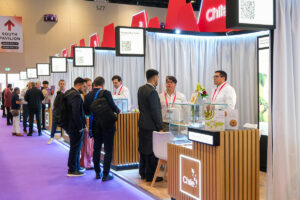
Being at Gulfood means opening doors for the diversification of our export portfolio in markets with high growth potential. Strengthening and diversifying our exports to the Middle East is part of a long-term strategy. That is why Chile has participated in Gulfood for many years. Our goal is to be recognized as a reliable, long-term supplier, which is extremely important for us.
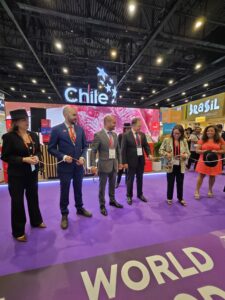
Dried fruit companies—such as hazelnuts, almonds, and walnuts—have a strong presence in the Chile Pavilion this year. What strategic attributes do these products have, and how does Chile seek to position them in international markets?
Chile is one of the world’s leading producers of dried fruits, walnuts, almonds, and dehydrated products. In addition, we are the world’s leading exporter of in-shell walnuts. This is due, first, to our counter-seasonal production compared to the Northern Hemisphere, where the main producers and consumers are located.
Chile also has a unique combination of climate and soil conditions, which gives our walnuts distinctive organoleptic characteristics—a term commonly used in the industry—such as a lighter color and a superior flavor profile that clearly differentiate them from other origins.
For example, Chilean walnuts are unique worldwide: their lighter color, texture, composition, and nutritional value make them highly sought after. As a result, the production area in Chile has continued to expand, strengthening our exportable supply.
While this is a traditional export offer, we also aim to diversify into other products. That is why we are here today with companies producing oats, as well as others offering more industrialized products, such as plant-based beverages.
Chile currently exports USD 24.7 billion in food products, which represents a very robust offering. We are global leaders in several categories, including cherries, walnuts, and dried plums, and we want to continue expanding and diversifying this portfolio. Equally important is maintaining our position as a reliable supplier, offering food products with food safety, traceability, quality, and—above all—sustainability, which is fundamental in today’s productive sector.
What other Chilean products can be found at Gulfood 2026?
We have a wide range of offerings. These include agro-industrial products such as oats, whose global demand is growing due to the increasing focus on healthier diets. Along the same line, we also present plant-based milks, juices, and a significant selection of dehydrated products, such as raisins and dried cranberries.
Our offer is very diverse, and our goal is to continue expanding that diversity. We are also showcasing several non-alcoholic beverage preparations, which are particularly interesting for this market. For example, there is a non-alcoholic wine from Chile called “Sinzero,” which is now projecting its offer into the Gulf region.
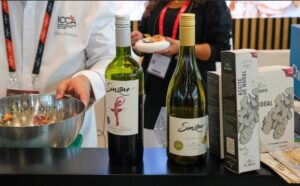
Another company, Vilay, is also present in the “drink” category, specifically with non-alcoholic mock drinks, which are highly suited to this market and belong to a rapidly growing global demand niche.
Also, Chile is one of the world’s leading producers and exporters of salmon, and Gulfood provides an excellent platform to showcase such a highly demanded product worldwide. A particularly important highlight has been the cooking shows at the Chile Pavilion, where Chilean salmon played a central role in the chef’s preparations.
Finally, what message would you like to convey to international buyers, distributors, and investors visiting the Chile Pavilion at Gulfood 2026?
Chile is a country full of opportunities. It is a major producing nation, with highly professional people who have many years of experience in international trade. I would also encourage visitors to visit Chile, because once you arrive, you are often surprised by its vast territory—over 4,000 kilometers in length—and its extraordinarily diverse geography.
This diversity allows Chile to be a strong supplier of a wide range of products: from wine and fresh fruits to dehydrated products; from apiculture in the south to many other sectors. If you are looking for a diverse and reliable export offer, Chile is an excellent partner.
Moreover, Chilean industries are deeply committed to quality, traceability, and sustainability. Today, industries cannot be conceived without caring for the environment and for people—and that commitment is firmly embedded in Chile’s productive sector.
(C) TRADEGULF.AE MAGAZINE – UAE