


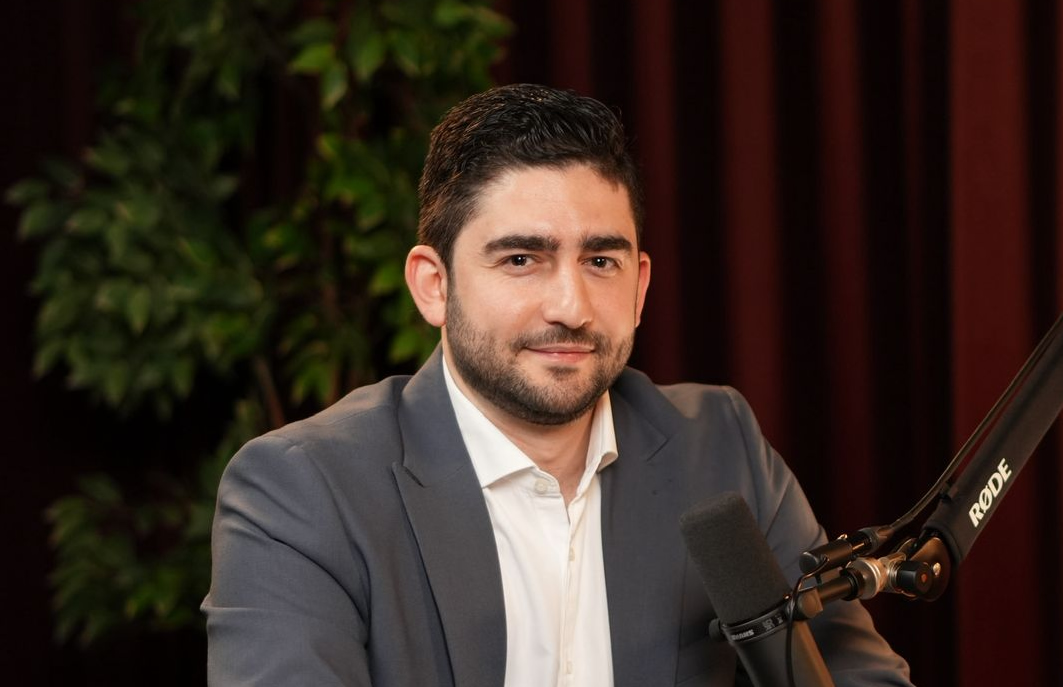
As Dubai continues to strengthen its position as a global hub for business, technology, investment and international trade, new opportunities are emerging for European companies seeking to expand into the Gulf and beyond.
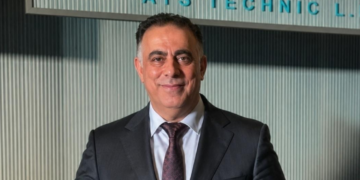
In this exclusive interview with TradeGulf.ae, Ivan Mavrov, Executive Officer of the Bulgarian Business Council in Dubai, shares his perspective on the growing economic relationship between Bulgaria and the UAE and the opportunities he sees for Bulgarian companies across the region.
Mavrov highlights technology, artificial intelligence, cybersecurity, fintech, agriculture and food security as areas with particularly strong potential for cooperation. He also discusses the importance of local knowledge, trusted relationships and cross-cultural business diplomacy when entering the UAE market.
With Dubai increasingly serving as a gateway to the wider Gulf, Middle East, Africa and Asia, Mavrov believes the next phase of Bulgaria–UAE relations will go beyond traditional trade, focusing increasingly on strategic partnerships, investment, joint ventures and knowledge exchange.
In the conversation, he also explains the role of the Bulgarian Business Council in Dubai in connecting businesses, investors and international business communities, and shares his vision for the Council’s development over the next five years.
For Bulgarian companies considering the UAE as their next international market—and for UAE investors looking toward Bulgaria—the message is clear: building the right relationships can be as important as identifying the right opportunity.
The Bulgarian Business Council in Dubai plays an important role in strengthening economic ties between Bulgaria and the UAE. What are the biggest opportunities you currently see for Bulgarian companies looking to enter Dubai and the wider Gulf market?
The biggest opportunities I currently see are in technology and food security—two areas where Bulgaria has a great deal to offer.
Bulgaria has established itself as a strong European hub for innovation, producing excellent talent, products, solutions and services across the technology sector. When you combine this expertise with the UAE’s ambition and appetite for technological advancement, AI and digital transformation, there is a natural synergy and significant potential for cooperation.
Food security is another area where I see considerable opportunity. Bulgaria has a strong agricultural tradition and produces high-quality food products that can compete internationally. At the same time, the food and agricultural landscape in the region is evolving, creating space for new suppliers, producers and innovative solutions. I believe Bulgarian companies that understand the market and position themselves correctly can take advantage of this shift.
The opportunity is certainly here. The key is to approach the market strategically, with the right preparation, positioning and local relationships.
From your experience across hospitality, tourism, business development and international partnerships, what are the biggest mistakes European companies make when trying to establish themselves in the UAE—and what should they do differently?
One of the biggest mistakes is entering the UAE market without doing sufficient research. Dubai is extremely business-friendly and the UAE is one of the safest countries in the world, but that should never be confused with not having to conduct proper due diligence.
Companies sometimes arrive with the assumption that they can immediately establish operations, find the right partners and start doing business. In reality, understanding the market and building the right network should begin well before any major investment or operation.
Having trusted contacts on the ground can save a company a tremendous amount of time, money and unnecessary difficulties. More importantly, the right network can open doors that are very difficult to access from outside the market.
This is one of the reasons we established the Bulgarian Business Council: to help Bulgarian companies navigate the UAE business environment, connect them with reliable people and organizations, and help them avoid costly mistakes. Our role is not simply to introduce Bulgaria to the UAE, but to help create the right environment for sustainable business relationships between the two countries.
You have been actively building relationships between the Bulgarian Business Council and other international business councils in Dubai. How important is this cross-cultural business diplomacy in creating real trade and investment opportunities?
I believe it is extremely important. Dubai is one of the few places in the world where you can have representatives of dozens of nationalities and business communities sitting around the same table. That creates a unique environment for international cooperation.
Business today is not built only through transactions; it is built through relationships, trust and access. By developing strong relationships with other business councils, chambers and international organizations, we are creating opportunities for our members that extend far beyond bilateral Bulgaria–UAE relations.
A Bulgarian company entering Dubai should not see the UAE only as a market of ten million people. It should see it as a gateway to the wider Gulf region, the Middle East, Africa and Asia. The international networks that exist here can provide access to all of these markets.
This is why I see cross-cultural business diplomacy as a very practical tool. The objective is not simply to organize events and exchange business cards. The objective is to create relationships that eventually lead to partnerships, investments, joint ventures and real trade.
For the Bulgarian Business Council, building these international relationships is therefore a key priority. The stronger our network becomes, the more opportunities we can create for Bulgarian businesses.
Bulgaria has strong capabilities in areas such as technology, manufacturing, tourism and logistics. Which Bulgarian sectors do you believe have the greatest potential to attract UAE investors or develop partnerships in the Gulf over the next five years?
Technology will certainly be one of the strongest areas, particularly AI, software development, cybersecurity, fintech and digital solutions. Bulgaria has exceptional technical talent and a strong innovation ecosystem, while the UAE has the ambition, capital and infrastructure to implement new technologies at scale. Bringing these two strengths together can create very interesting partnerships.
I also see significant potential in agriculture, food production and food technology. Food security is strategically important for the Gulf, and Bulgaria has both the agricultural capacity and the quality of products to become a stronger partner in this field.
Beyond these sectors, manufacturing, logistics, tourism and hospitality also offer considerable potential. Bulgaria’s geographical position between Europe and Asia gives it strategic importance, while UAE investors increasingly look internationally for opportunities that provide access to European markets.
However, attracting investment is not simply about saying that Bulgaria has good companies or good opportunities. We need to present these opportunities in a language investors understand—with clear business cases, reliable partners, scalability and long-term potential.
Our responsibility is to help build that bridge: to identify serious opportunities in Bulgaria, present them effectively in the UAE, and connect the right people on both sides.
Dubai is constantly evolving as a global business hub, particularly with AI, innovation and new models of international trade. What do you believe will define the next generation of Bulgaria–UAE business relations, and where would you like to see the Bulgarian Business Council in five years?
I believe the next generation of Bulgaria–UAE relations will be defined by moving from traditional trade toward strategic partnerships, technology, investment and knowledge exchange.
The UAE is moving incredibly fast in areas such as artificial intelligence, digital infrastructure, sustainability and future technologies. Bulgaria, on the other hand, has strong technical talent, innovative companies, competitive industries and access to the European market. There is a great opportunity to combine these strengths.
In five years, I would like the Bulgarian Business Council to be recognized as one of the key platforms connecting Bulgaria not only with the UAE, but with the wider Gulf business ecosystem.
Success for me would not simply mean having more members or organizing more events. The real measure of success will be tangible results: Bulgarian companies entering the region successfully, UAE investments reaching Bulgaria, joint ventures being established, and Bulgarian entrepreneurs gaining access to opportunities that would otherwise have been difficult to reach.
Ultimately, I would like the Council to become a trusted first point of contact. When a Bulgarian company considers entering the UAE, or when a UAE investor begins looking at opportunities in Bulgaria, they should know that there is a strong, credible network ready to connect them with the right people.
If we can achieve that, we will have built something that goes far beyond a business council—we will have created a lasting economic bridge between Bulgaria and the UAE.
(C) tradegulf.ae 2026