


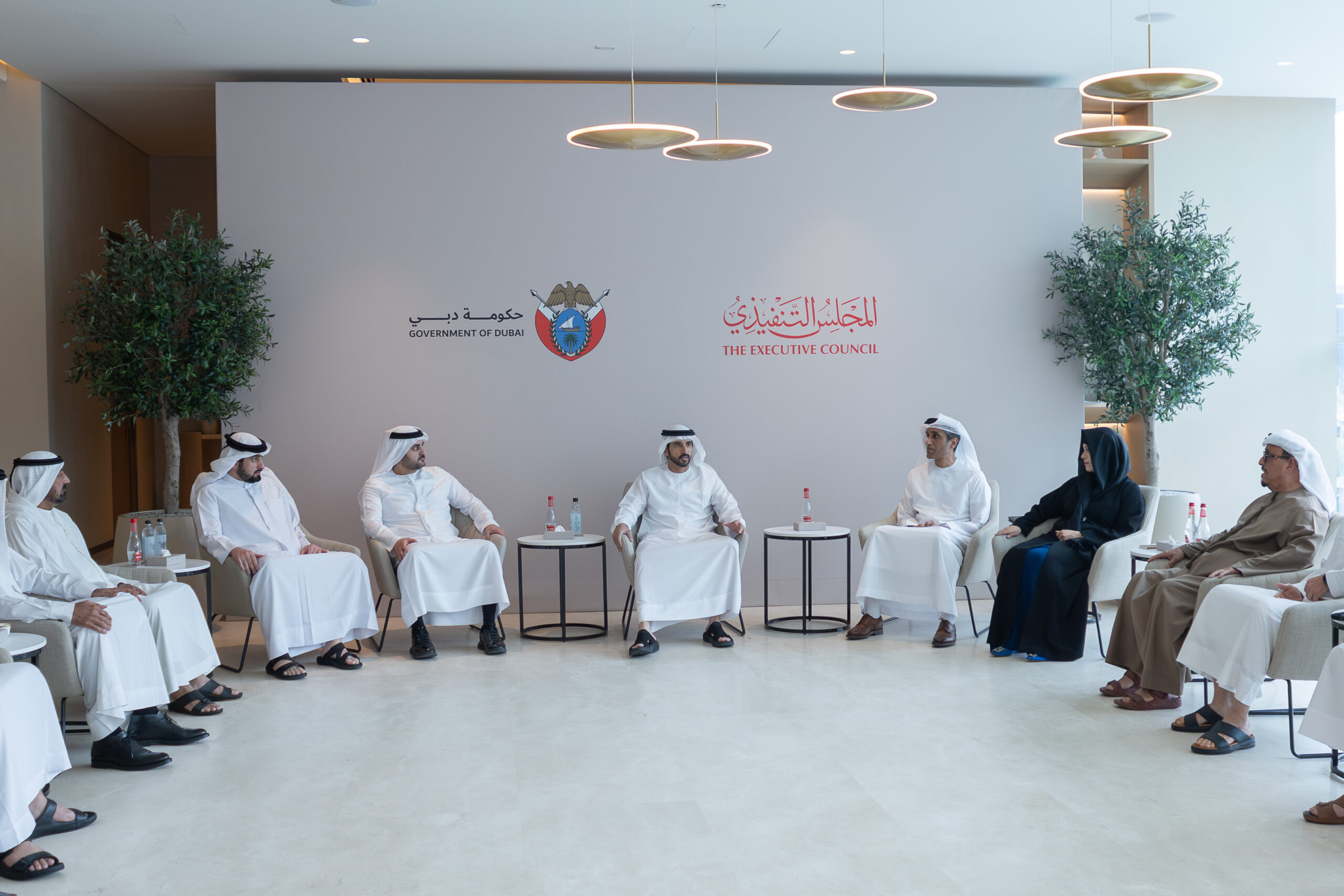
Dubai, 30th March, 2026 – His Highness Sheikh Hamdan bin Mohammed bin Rashid Al Maktoum, Crown Prince of Dubai, Deputy Prime Minister and Minister of Defence of the UAE, and Chairman of The Executive Council of Dubai, has approved a series of strategic initiatives designed to empower individuals and society, support trade and investment, enhance the measurement of economic performance, and ensure the well-being of the workforce. These approvals took place during a high-level council meeting attended by senior leaders including H.H. Sheikh Maktoum bin Mohammed bin Rashid Al Maktoum, and H.H. Sheikh Ahmed bin Mohammed bin Rashid Al Maktoum.
The Council has green-lighted five key projects and initiatives:
- AED1 billion in economic incentives benefitting Dubai’s economy and society;
- Reporting on Dubai’s economic growth during the fourth quarter of 2025, with an updated methodology for measuring the emirate’s GDP;
- The Virtual Warehouses Initiative;
- The Dubai Empowerment Strategy;
- The Health and Safety Strategy for Workers’ Accommodation.
These decisions were made in line with the vision of President His Highness Sheikh Mohamed bin Zayed Al Nahyan and His Highness Sheikh Mohammed bin Rashid Al Maktoum.
Sheikh Hamdan stated: “Under the visionary leadership of His Highness Sheikh Mohamed bin Zayed and His Highness Sheikh Mohammed bin Rashid, and with the determination of its people and an open, inclusive society, the UAE is well-positioned for a better future.” He added, “Dubai has earned a reputation for credibility, transparency, and trust among businesses and investors worldwide, and stands ready to meet any challenge through the determination of its people and the strength of its inclusive society.”
The economic incentives package of AED1 billion will be rolled out between April and September 2026 and will support both individuals and businesses. Key features include the deferral of various government fees for three months, including allowing hotels to postpone 100% of sales fees and the Tourism Dirham to boost liquidity in hospitality and tourism. Other provisions include extending customs data grace periods from 30 to 90 days, with possible further extensions, and streamlining the issuing and renewing of residency permits to attract more talent to live and work in Dubai.
For the fourth quarter of 2025, Dubai recorded a robust 6.4 percent growth, while overall GDP for the year grew by 5.4 percent, reaching AED937 billion. The Council also approved updates to how Dubai’s GDP is calculated, incorporating broader economic surveys and expanding statistical coverage to more accurately reflect all economic activities.
The Virtual Warehouses Initiative, overseen by Dubai Customs, is set to facilitate temporary imports—notably artworks—by removing customs duties and financial guarantees for such items and suspending duties on private artworks for up to three years. This initiative also introduces virtual tracking of high-value items and removes geographical restrictions, reinforcing Dubai’s status as a global art marketplace.
The Dubai Empowerment Strategy, led by the Community Development Authority, builds on the achievements of the Dubai Empowerment Programme, which has benefitted 1,200 young Emiratis, created over 7,000 jobs, and partnered with more than 400 entities. This strategy aims to boost living standards, financial stability, and sustainable employment, while supporting both job seekers and entrepreneurs, by fostering partnerships across different sectors.
Additionally, the Council endorsed the Health and Safety Strategy for Workers’ Accommodations. The initiative aims, by 2033, to guarantee 100% access to essential services for workers and full compliance with updated health and safety regulations. This supports both the Dubai 2040 Urban Master Plan and aligns with the standards of the International Labour Organisation (ILO).
Collectively, these new measures and strategies underscore Dubai’s ongoing commitment to sustainable development for its people, businesses, and workforce, highlighting its role as a leader in economic performance, social inclusion, and urban innovation.
Team V.4-EM-UAE